The Philosophy
Most athletes and highly active people who struggle with aesthetic progress are not failing due to lack of effort. In many cases, they are already training at a volume and intensity that approaches their recoverable limits. The problem is not that they are doing too little, but that their training system is not designed to allocate adaptation deliberately under constraint.
Aesthetic development is an adaptive process. Like strength, endurance, or skill acquisition, it responds to stimulus magnitude, frequency, sequencing, and recovery. When aesthetic outcomes are left to emerge incidentally from training that is designed around other priorities, results are often slow, inconsistent, or unpredictable. Adaptation follows design, not intent.
For athletes with high existing training demands, the relevant question is not whether aesthetics can be pursued, but how they can be pursued, and at what speed, without degrading performance or exceeding recovery capacity. Performance training, endurance work, sport practice, travel, and life stress all impose real physiological costs on the human body. These costs compete for finite resources, energy availability, connective tissue tolerance, central nervous system bandwidth, and time. Ignoring this competition does not eliminate it, but instead makes its consequences harder to predict.
Conventional approaches fail because they do not model this reality; pure bodybuilding-style hypertrophy programming often assumes a recovery environment that does not exist for athletes. High volumes, redundant stressors, and failure-centric loading may be tolerable in isolation, but when layered onto sport specific demands they frequently impair performance, power, increase injury risk, or force unsustainable tradeoffs. Conversely, performance focused environments often treat aesthetics as irrelevant or even morally suspect, without a structured pathway for physique focused development at all.
Our approach begins from the premise that performance and aesthetics are competing adaptive demands that can be managed and balanced. Rather than attempting to maximize every variable simultaneously, we treat training as a constrained optimization problem. Performance requirements and life demands define the boundaries of the system, and within those boundaries, aesthetic development must be biased deliberately, sequenced intelligently, and progressed according to the allowable limits of recovery across domains.
We must accept tradeoffs explicitly rather than emotionally denying them, which means rotating priorities across training cycles instead of stacking incompatible demands indefinitely. It is crucial to distinguish between a stimulus that produces meaningful adaptive signal, and one that merely accumulates fatigue.
Fatigue management is central to this process. Acute exhaustion is not evidence of effectiveness. In many cases, it is counterproductive, reducing training quality, impairing coordination, and limiting the very adaptations it may have been attempting to induce. Sustainable progress depends on recoverable stimulus, not maximal stress. Designing for energy economy, how much adaptation can be produced per unit of fatigue, is far more important than arbitrarily increasing workload.
Aesthetic goals themselves are not inherently aligned with sport performance: that is acceptable. The objective is not to pretend otherwise, but to design training that respects this conflict and divergence; biasing hypertrophy in phases toward specific regions, managing body composition intentionally, or prioritizing visual outcomes requires clarity about what is being emphasized, and whether such an outcome is even suitable for a given phase.
This approach is not about motivation, discipline, identity, or any type of moralization. It does not rely on transformation narratives or promises of rapid change. It is grounded in well established and researched principles of physiology, adaptation, and training theory, applied to individuals whose constraints are real and non-negotiable. The work is analytical, iterative, and context dependent.
For the right person, our framework offers confidence that their training program is not just indiscriminately hard, but that it is fundamentally coherent; that effort is being translated into outcomes intentionally rather than as an accidental quality of training. That aesthetic development is being pursued intellectually honestly, without sacrificing the performance and functions which define them as an athlete in the first place.
Founded by Divya Thekkath
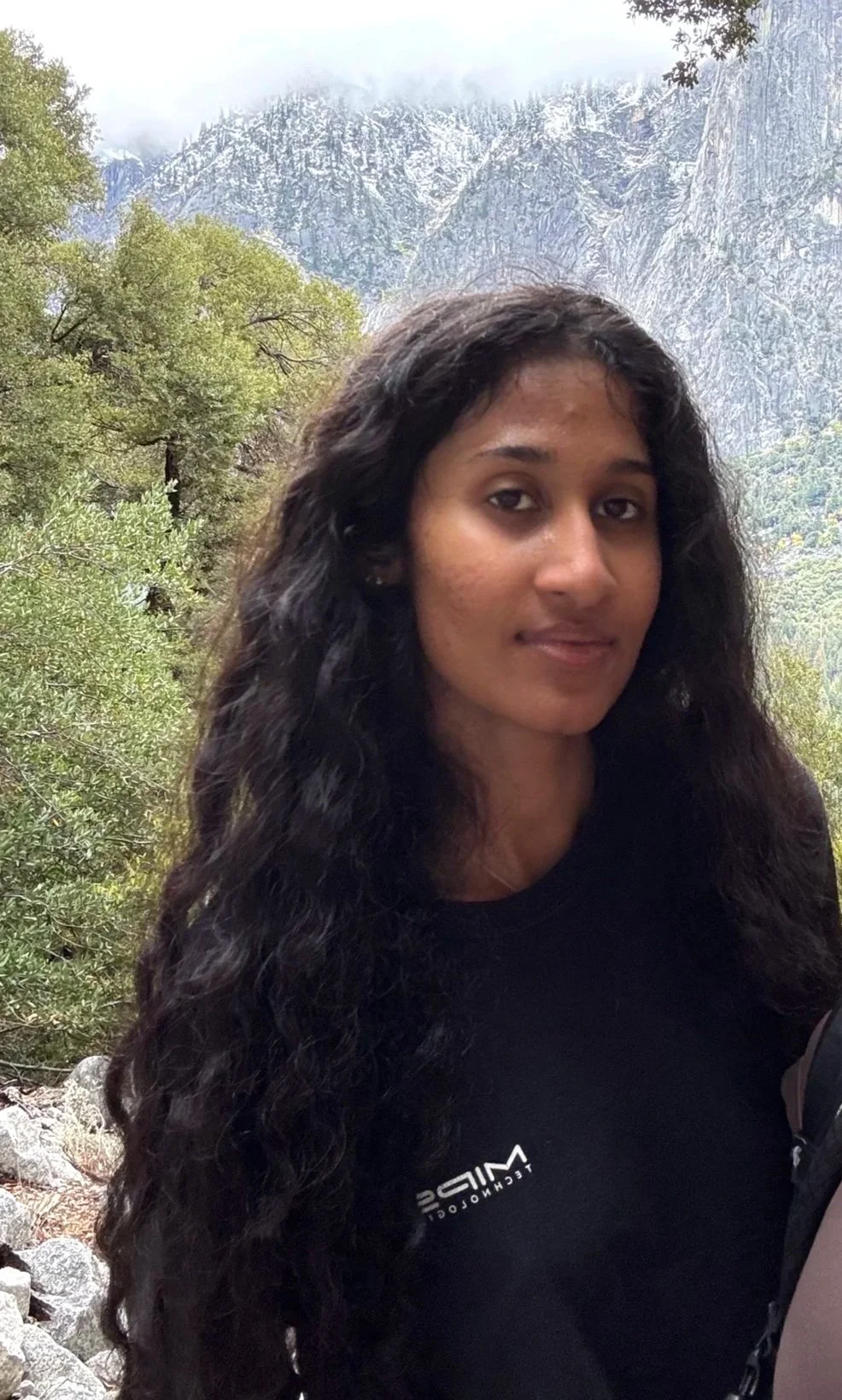
Lotus Aesthetic Systems was created by an athlete with high training demands and a passion for a systems oriented approach applied to human physiology and program design.
The approach is informed by Divya’s direct experience balancing performance, recovery constraints, and deliberate aesthetic goals, grounded first in valuing evidence based training principles.
This practice exists to address a structural gap in how aesthetic development is approached for trained individuals, not as a motivational or sheer volume problem, but as a design problem.